
Plate Testing: Essential Ground Investigation for Safe Construction Projects
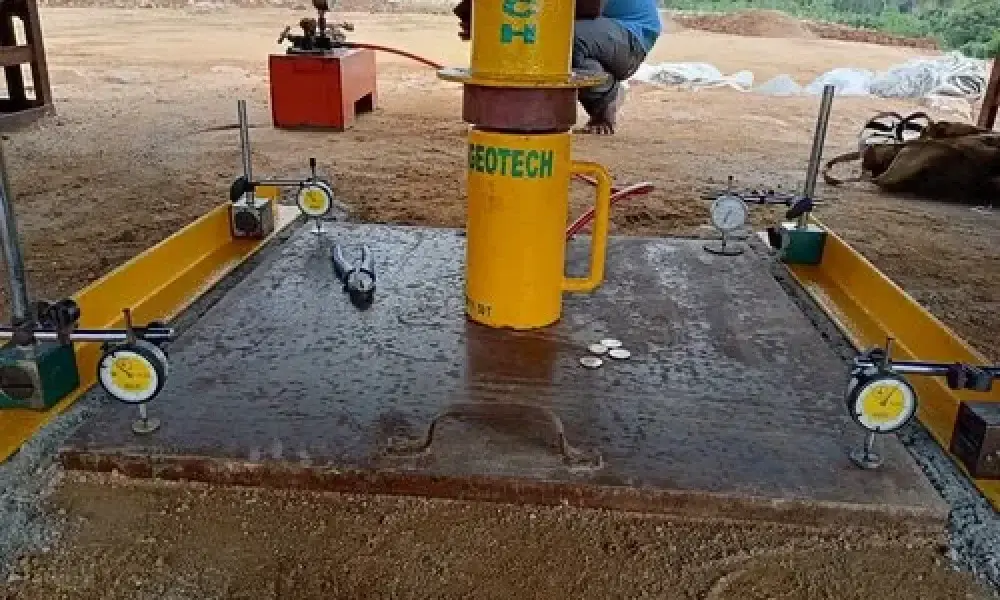
Plate load testing represents a fundamental site testing method in civil engineering, providing reliable data about the strength and bearing capacity of ground conditions. At Site Testing Services (Nationwide) Ltd, we understand that successful construction projects depend on comprehensive ground investigation, and plate bearing tests deliver the reliable results needed to ensure the project’s success. This in situ test method has become indispensable for evaluating whether sites have sufficient bearing capacity to support construction equipment, temporary structures, and permanent foundations.
Understanding Plate Load Testing and How It Works
Plate load testing, also known as the plate bearing test, is an in situ test that measures the bearing capacity and settlement characteristics of soil or construction materials under controlled loading conditions. The test measures how the ground responds to increasing load applied through a circular steel plate, providing valuable insights into deformation characteristics and safe bearing capacity at the test location.
Plate testing involves placing a steel plate directly onto the prepared ground surface and applying load increments through a hydraulic jack while monitoring settlement. The loading plate, typically a circular steel plate with standardised plate diameter options ranging from 300mm to 750mm, distributes the applied load across a defined area. As the load is applied progressively, dial gauges or electronic sensors measure vertical displacement, creating a graphical representation of the load-settlement relationship.
This test measures the subgrade reaction and strain modulus of the ground, which are critical design parameters for civil engineering purposes. The data collected helps engineers determine the ultimate bearing capacity and predict likely settlement under various loading scenarios, from crane outriggers to heavy tracked plant operations.
The Plate Bearing Test Procedure
Professional plate bearing test work begins with careful preparation of the test location. The test area must represent typical ground conditions for the project, with the surface levelled and any loose material removed. For working platform construction or granular layer assessment, testing may occur at different depths within a shallow pit to evaluate conditions at specific levels.
The test plate, usually a rigid bearing plate made of steel, is positioned on the prepared surface. A reaction load system provides the necessary resistance for the hydraulic jack to apply force against. This reaction load required can be supplied by various means, including kentledge (dead weight), a piling rig, or anchored beams, depending on the maximum applied load needed and site constraints.
Load increments are applied systematically, with each increment maintained until settlement stabilises before proceeding to the next level. The load applied at each stage is recorded along with corresponding settlement readings from multiple dial gauges positioned around the test plate. This process continues until reaching the maximum applied load specified in the testing program or until excessive settlement occurs.
Modern plate load testing equipment allows test results to be analysed electronically, providing immediate feedback and same-day provisional data. This enables rapid quality control decisions and reduces construction risk by identifying ground conditions issues before major construction activities commence.
Applications in Construction and Civil Engineering
Plate testing serves numerous civil engineering purposes across diverse construction projects. One primary application involves assessing working platforms for construction equipment. When contractors need to bring heavy machinery, including mobile cranes with crane outriggers or tracked plant, onto a site, plate bearing tests verify that the platform construction provides adequate support. The test measures whether crane pads and working platforms have sufficient bearing capacity to prevent excessive settlement that could compromise equipment stability and site safety.
For temporary structure design, plate load testing provides essential design parameters. Construction sites often require temporary access roads, storage areas, or support structures that must safely carry a given load without failing. The bearing pressure data obtained through plate testing ensures these temporary installations meet safety requirements while remaining cost-effective.
The relationship between plate bearing test results and California Bearing Ratio (CBR test) values provides additional utility. Engineers can derive an equivalent CBR value from plate testing data, enabling correlation with pavement design standards. This dual functionality makes plate testing particularly valuable for road construction and working platform construction projects involving granular materials.
Foundation design for permanent structures also benefits from plate load testing. The test results reveal settlement characteristics and bearing capacity of the ground at proposed foundation levels, informing decisions about foundation type, size, and depth. Understanding deformation characteristics helps engineers predict long-term settlement behaviour and design appropriate foundation solutions.
Advantages of In Situ Plate Testing
Conducting plate bearing tests as in situ site conditions testing offers significant advantages over laboratory-based methods. Testing ground in its natural state, including existing moisture content, density, and stress conditions, provides more representative, reliable data than laboratory samples that may be disturbed during collection and preparation.
The plate size can be selected to match specific project requirements, with larger plate diameter options used when assessing capacity for heavy loads or when investigating deeper soil influence zones. This flexibility allows tailoring the test work to project-specific needs, whether evaluating shallow granular layers or deeper foundation conditions.
Plate testing delivers accurate and reliable data relatively quickly, with many tests completed and analysed electronically within the same day. This rapid turnaround supports efficient project scheduling and enables timely decision-making. The cost-effective nature of plate bearing tests, compared to more extensive ground investigation methods, makes them accessible for projects of various scales.
The graphical representation produced from test results provides an intuitive visualisation of ground behaviour. Load-displacement curves clearly show how settlement progresses with increasing load, helping identify the safe bearing capacity where settlement remains acceptable. This visual data supports communication between site testing professionals, design engineers, and construction teams.
Technical Considerations and Quality Assurance
Achieving reliable results from plate load testing requires attention to numerous technical factors. The test location must be carefully selected to represent typical ground conditions for the construction area. For working platforms, testing should occur after the granular layer has been properly compacted and before construction equipment operations begin.
The reaction load required must be sufficient to apply the maximum applied load safely and stably. The hydraulic jack and supporting framework must be positioned to ensure vertical load application without eccentric loading that could skew test results. Proper calibration of measurement instruments, whether traditional dial gauges or electronic sensors, ensures data accuracy.
Quality control procedures verify that test work follows established standards and protocols. At Site Testing Services (Nationwide) Ltd, our experienced team ensures every plate bearing test measures ground response accurately, following best practices for equipment setup, load application, and data recording. This attention to quality control minimises construction risk and provides confidence in the bearing capacity assessments used for critical project decisions.
Conclusion
Plate testing remains an essential tool for evaluating the capacity of the ground across diverse construction projects. Whether assessing working platforms for crane outriggers, verifying adequate support for tracked plants, or determining design parameters for civil engineering structures, plate load testing provides the accurate and reliable data needed for informed decision-making.
At Site Testing Services (Nationwide) Ltd, we deliver comprehensive site testing services, including plate bearing tests that provide valuable insights into ground conditions. Our cost-effective testing solutions, available with same-day results that can be analysed electronically, support the project’s success by identifying potential issues before they become costly problems. Understanding how the plate bearing test works and applying this knowledge appropriately ensures construction projects proceed safely on ground with sufficient bearing capacity for their intended purpose.
- Hello Services – Professional Cleaning and Property Services Across the UK
 When it comes to maintaining a clean, safe, and well-managed property, choosing a reliable service… Read more: Hello Services – Professional Cleaning and Property Services Across the UK
 - Why Should You Choose Vela One for Your Next Home or Investment?
 If you’re considering investing in Singapore’s luxury real estate or are looking for a new… Read more: Why Should You Choose Vela One for Your Next Home or Investment?
 - Sustainable HVAC & Building Upgrades: How to Reduce Energy Bills and Carbon Footprint in Commercial BuildingsEnergy efficiency has become one of the most important priorities for UK businesses. Rising utility… Read more: Sustainable HVAC & Building Upgrades: How to Reduce Energy Bills and Carbon Footprint in Commercial Buildings
- Wellness and Recreational Facilities at Lentor Gardens Residences
 Introduction: Living a Balanced Lifestyle Lentor Gardens Residences is designed to promote a holistic lifestyle… Read more: Wellness and Recreational Facilities at Lentor Gardens Residences
 - How We Made Our House Extension Eco-Friendly
 When we decided to add a garden room extension last year, I knew from the… Read more: How We Made Our House Extension Eco-Friendly

Hello Services – Professional Cleaning and Property Services Across the UK

How We Made Our House Extension Eco-Friendly
Plate Testing: Essential Ground Investigation for Safe Construction Projects

Wall Decor Trends That Will Define the Next Decade
Hello Services – Professional Cleaning and Property Services Across the UK

Sustainable HVAC & Building Upgrades: How to Reduce Energy Bills and Carbon Footprint in Commercial Buildings

Wellness and Recreational Facilities at Lentor Gardens Residences